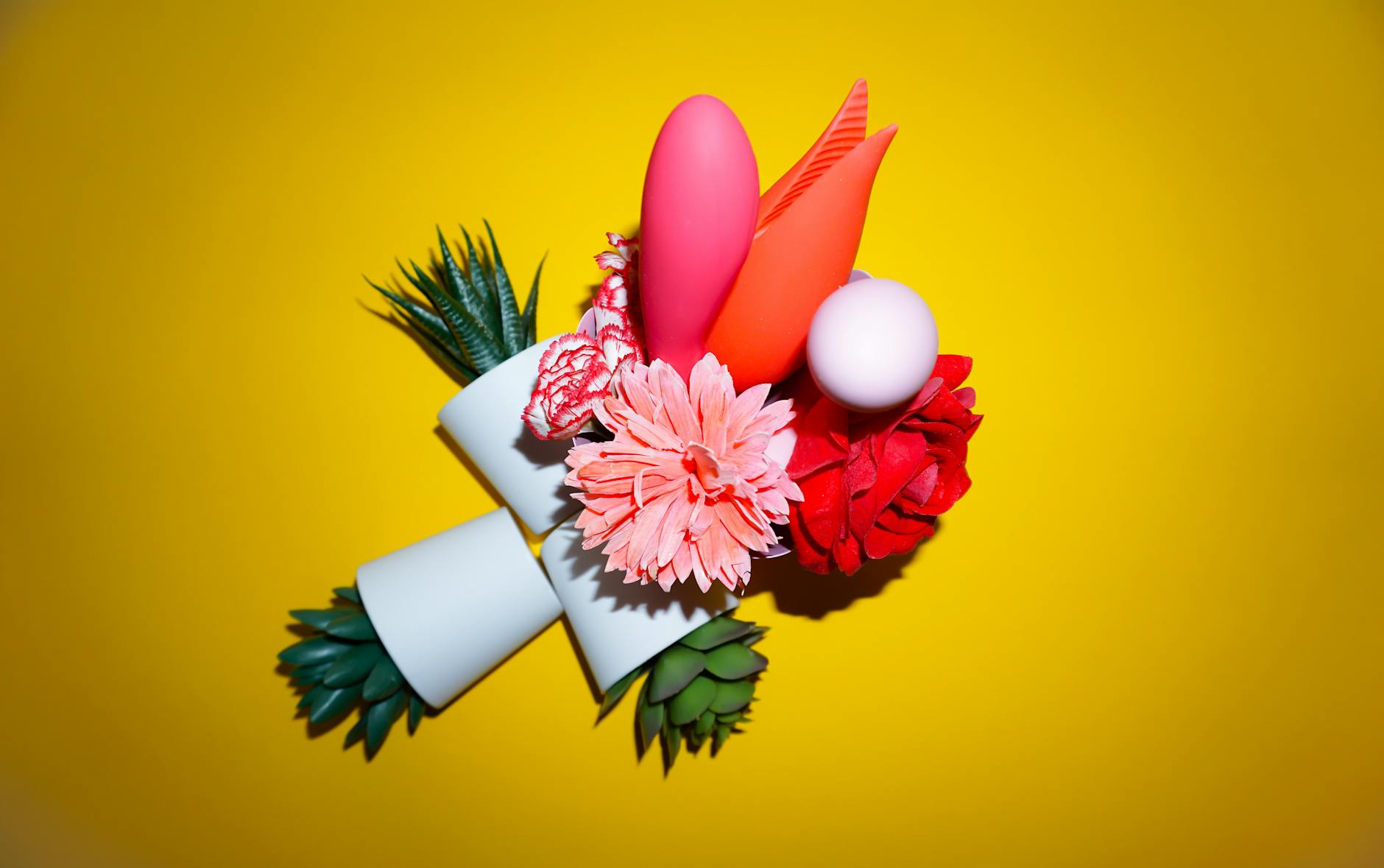
Here's what no one tells you about pleasure and your cycle
Your clitoris doesn't feel the same way on day 5 of your cycle as it does on day 18. That's not in your head. Hormonal fluctuations literally change blood flow, tissue sensitivity, and how quickly pleasure builds. Most people blame themselves for this shift. Some stop exploring altogether. But here's the thing: understanding the rhythm is where the real freedom starts.
I work with clients who spend months thinking their lemon vibrators aren't working because they don't feel the same week to week. Then we map their cycle against their pleasure patterns, and everything clicks into place. Your device isn't the problem. Your body's natural rhythm is just doing exactly what it's supposed to do.
How hormones change clitoral sensation across your cycle
Estrogen and progesterone fluctuate in a predictable pattern over roughly 28 days, and your clitoris responds to every shift. Here's what's actually happening physiologically.
In the follicular phase (days 1-14, starting from your period), estrogen climbs. This rising estrogen increases blood flow to the clitoris, makes tissue more engorged, and heightens nerve sensitivity. That's why many people report that sensation feels sharper, pleasure builds faster, and orgasms arrive more easily around ovulation. Everything feels closer to the surface.
During the luteal phase (days 15-28), progesterone rises and estrogen dips. Blood flow to the clitoris decreases slightly. Tissue is less engorged. Nerve sensitivity mellows. Pleasure builds more slowly and feels deeper, less quick-trigger intense. The difference isn't huge, but it's real enough that your favorite vibrator setting might feel too intense one week and not quite enough the next.
Your clitoris also has a micro-cycle. Around ovulation, the clitoral glans actually swells slightly in response to the hormone surge. Post-ovulation, that swelling reduces. This alone changes how pressure and suction feel.
Why lemon vibrators adapt better to cycle shifts
Traditional vibrators deliver consistent mechanical vibration no matter where you are in your cycle. Lemon clitoral vibrators use air-suction technology, which means the sensation adapts to your body's actual response in real time. That's not magic. It's physics.
Here's the difference: When you're in your high-estrogen follicular phase and tissue is more engorged, suction can feel incredibly intense on a high setting. During the luteal phase, that same setting might feel less stimulating because there's less tissue volume to create suction against. But because you're controlling the intensity, you can dial it down when you need to and up when you want it.
With a traditional vibrator, you're stuck with whatever frequency it delivers. Your body is moving through hormonal shifts, but your toy is static. Lemon clitoral vibrators give you a tool that responds to what your body is actually doing.
What to expect in each phase
Follicular phase (days 1-5 roughly): Sensation might feel muted or numb in the first day or two, especially if your period is heavy. Pain receptors are heightened. Stick with medium intensity or lower. By days 3-5, as bleeding lightens, sensation typically sharpens. You can usually move toward higher settings without discomfort.
Ovulation window (days 10-14): This is the sweet spot for most people. Sensation feels sharp, pleasure builds fast, orgasms are often easier and more intense. If you've been frustrated with your device, test it now. You might find you love it. Just watch that you don't push to intensity levels you'll regret during the luteal phase.
Early luteal (days 15-18): You might notice a small dip right after ovulation. Sensation is still good, but not quite as lightning-fast as the ovulation window. Settle into medium-high intensity. This is when many people say their lemon vibrator feels "just right."
Late luteal (days 19-28): Sensation softens. Pleasure takes longer to build. You might feel like you need higher intensity, but often what you actually need is more time and a lower setting with longer warm-up. Your body isn't less responsive. Progesterone is just dampening the quick-fire responsiveness of the follicular phase. Work with it. Lower intensity, longer sessions, more patience.
The anxiety trap
Here's what usually happens: Someone discovers their clitoral vibrator during their follicular phase. Everything feels incredible. Then they hit the luteal phase, sensation feels different, and they assume either the device is broken or their body is broken. Neither is true.
The worst part is that this anxiety about "why doesn't it feel the same" actually dampens sensation further. Stress raises cortisol, which reduces blood flow. You're now fighting a triple headwind: progesterone naturally reducing sensitivity, anxiety constricting blood flow further, and the mental noise of "why isn't this working."
The moment you understand it's cycle-based, that anxiety dissolves. It's not a failure. It's information.
How to use your lemon vibrator across your cycle
Track both your cycle and what feels good. Get a simple period tracking app or just note in your phone: day of cycle, intensity you used, how the sensation felt. After two or three cycles, patterns will emerge. You'll see that you prefer settings 1-3 during your period, settings 4-6 during your follicular phase, and settings 2-4 during your luteal phase.
Adjust your expectations accordingly. During the follicular phase, plan for shorter sessions because pleasure builds faster. During the luteal phase, budget more time and lean into lower intensity. It's not a limitation. It's precision.
If you're using a lemon vibrator with a partner, the same logic applies. How Lemon Clitoral Vibrators Work Best With Partners Who Prefer Slow Buildup covers partner timing. Cycle awareness just adds another layer. Your partner might notice you prefer different pacing at different times. That's them paying attention, not you being inconsistent.
Consider also that stress, sleep, hydration, and where you are mentally all modulate sensation on top of hormones. A high-estrogen day when you're anxious might feel duller than a low-estrogen day when you're calm. Don't overthink it. Just notice. Curiosity beats judgment.
When cycle-based shifts mean something else
Most monthly variation in sensation is straightforward hormonal rhythm. But occasionally, a sudden change signals something worth checking out.
If sensation becomes painful or sharp during a normally good phase, that's worth noting. If you suddenly feel numb during your follicular phase when you're usually responsive, consider hydration and stress levels. If the shift is dramatic and stays dramatic for two or three cycles, touching base with your doctor makes sense. Sometimes medication changes, thyroid shifts, or other factors can affect sensation independent of your cycle.
But the month-to-month softening and sharpening that correlates with your hormonal rhythm? That's just your body being a body. It's information, not broken.
Why this matters
Understanding your cycle transforms how you relate to pleasure. You stop treating your body like a machine that should perform consistently. You start treating it like a living system with rhythm and responsiveness. You use tools that match where you actually are, not where you were last week.
Lemon vibrators, with their adaptive suction technology, let you meet your body where it is without constantly re-learning settings. That flexibility is the whole point. Your sensation shifts. Your tool adapts. No anxiety. No overthinking. Just pleasure that flows with your actual biology.
People also ask
How do I know if my cycle is actually affecting my sensation or if something's wrong?
Map your sensation against your cycle for two to three months. If you notice a clear pattern that follows your menstrual and hormonal rhythm, it's cycle-based. If the change is sudden, extreme, painful, or doesn't correlate with your period at all, check with a healthcare provider. Most sensation shifts are hormonal rhythm. But patterns that don't fit your cycle, or that involve pain, deserve professional attention.
Can I use a lemon clitoral vibrator safely throughout my entire cycle, including during my period?
Yes. Many people find that gentle suction during their period actually feels comforting because it's lower-pressure than traditional vibration. You'll want to use lower intensity settings during heavier bleeding days, but there's no reason to stop using your device. Just make sure you're comfortable with the sensation and have good access to water and lubrication.
Why does my sensation feel more intense right before ovulation?
That's the hormone surge. Estrogen peaks just before ovulation, and a sharp LH surge triggers ovulation itself. This hormonal spike increases blood flow to your clitoris, making it more engorged and more sensitive. It's also why many people report their highest sex drive around ovulation. It's biological. After ovulation drops, progesterone rises, and that quick intensity softens into something slower and deeper.
Does birth control change how lemon vibrators feel?
Yes, because hormonal birth control changes your hormone levels overall. If you're on hormonal birth control, you'll have a flatter hormonal curve instead of the monthly peaks and valleys of a natural cycle. Some people find sensation feels more consistent month to month. Others say it feels muted overall. How Lemon Vibrators Help When Clitoral Sensation Feels Different After Stopping Birth Control digs into that transition specifically if you've recently changed your contraception.
If I'm in my luteal phase and sensation feels dull, should I use a stronger setting?
Not necessarily. Stronger intensity during your luteal phase can feel jarring because your tissue isn't as engorged. Instead, extend your warm-up time and use medium intensity for longer. You'll often find that patience gets you where force wouldn't. If dullness is extreme or painful, that's when it's worth checking hydration, stress, and sleep. Sometimes the solution isn't more intensity. It's more time.
How do I explain cycle-based sensation shifts to a partner?
Keep it simple: "My body feels different at different times in my month. That's normal. Sometimes I want faster intensity, sometimes I want to take more time. Let me show you what feels good right now." Partners who care will appreciate the roadmap. It removes the guessing and makes everything less fraught.
The bottom line
Your lemon vibrator isn't broken. Your sensitivity isn't broken. Your cycle is just doing what cycles do. The moment you sync your expectations and settings with where you are hormonally, everything becomes easier. You stop fighting your body and start working with it. That shift alone transforms how pleasure feels.