When your body doesn't respond the way it used to
You stopped hormonal birth control. Maybe it wasn't working for you anymore. Maybe you wanted to feel more like yourself. Maybe you're planning to try conceiving, or maybe you're just done with the side effects. Whatever the reason, within days or weeks, you might notice something: your clitoris feels different.
Something that used to make you come in five minutes now takes twenty. Or the reverse. Or the sensation is sharper, or duller, or weirdly numb on one side. This isn't psychological. It's biochemical. And it absolutely changes how you approach pleasure.
The tricky part is that nobody warns you about this. Your doctor discusses mood, bleeding, and risk. They rarely mention sensation. So you're left wondering if something is wrong, when really your body is just recalibrating.
What hormonal birth control actually does to sensation
Hormonal contraception doesn't just prevent pregnancy. It floods your body with synthetic estrogen and progestin, which changes blood flow, tissue thickness, and nerve sensitivity everywhere. Your clitoris isn't exempt from that shift.
The pill dampens arousal for many people. It does this partly by lowering testosterone (yes, people with ovaries make testosterone, and yes, it matters for desire). But it also changes how quickly blood rushes to the clitoris during arousal, which alters the speed and intensity of sensation buildups.
Some people on hormonal birth control describe their clitoris as feeling muted or distant. Others report needing much longer warm-up time. A few feel heightened sensitivity but less control over when they come. None of these are broken. They're just the normal effect of synthetic hormones on delicate nerve tissue.
When you stop, that effect doesn't reverse immediately. It reverses in waves. The first two weeks, your body is still flooded with residual hormones. By week three to four, natural testosterone starts climbing again. By month two or three, you're often experiencing a new baseline that you haven't felt in years. Maybe ever, if you started birth control as a teenager.
The four most common sensation shifts after stopping hormonal birth control
1. Sudden hypersensitivity.
This is wild and disorienting. Your clitoris feels almost raw, like the nerve endings woke up after dormancy. Direct touch that felt fine before now feels too intense. Some people describe it as almost painful, not in a bad way, but in a "I have to be careful here" way.
This typically peaks around week two to four and usually settles by month two. The cause is straightforward: testosterone rebounds, blood flow increases to genital tissue, and nerve sensitivity spikes accordingly.
2. Slower arousal time.
Contrary to what you might expect, stopping birth control doesn't always make you come faster. For some people, especially those whose baseline arousal was already sluggish on the pill, the transition means you need even more warm-up time before sensation builds.
This is often temporary, but it can linger for three to six months as your hormonal cycle reestablishes itself. If you had a regular cycle before birth control, you'll also notice that your sensitivity varies across your cycle now. Days 8-14 of your cycle, around ovulation, you're often most easily aroused. Days 21-28, you might feel more muted again.
3. Asymmetrical sensation.
One side of your clitoris feels more responsive than the other. This is surprisingly common and usually resolves on its own, but it's disorienting when it happens. The cause is often just uneven blood flow redistribution as your body recalibrates.
4. Completely new pleasure patterns.
Maybe you always came from indirect clitoral stimulation before. Now you need direct pressure. Or you could never handle direct touch, and suddenly you crave it. Your orgasm threshold might shift. What triggered you at speed 2 before now requires speed 5. These changes are real and worth exploring rather than fighting.
Why Lemon clitoral vibrators adapt better than traditional toys
Lemon's suction-based design works especially well during this transition period for one specific reason: it doesn't demand consistent tissue response.
Traditional vibrators require your clitoris to be in a specific state of engorgement to feel good. Too much blood flow and direct vibration feels overwhelming. Not enough and you feel nothing. It's binary.
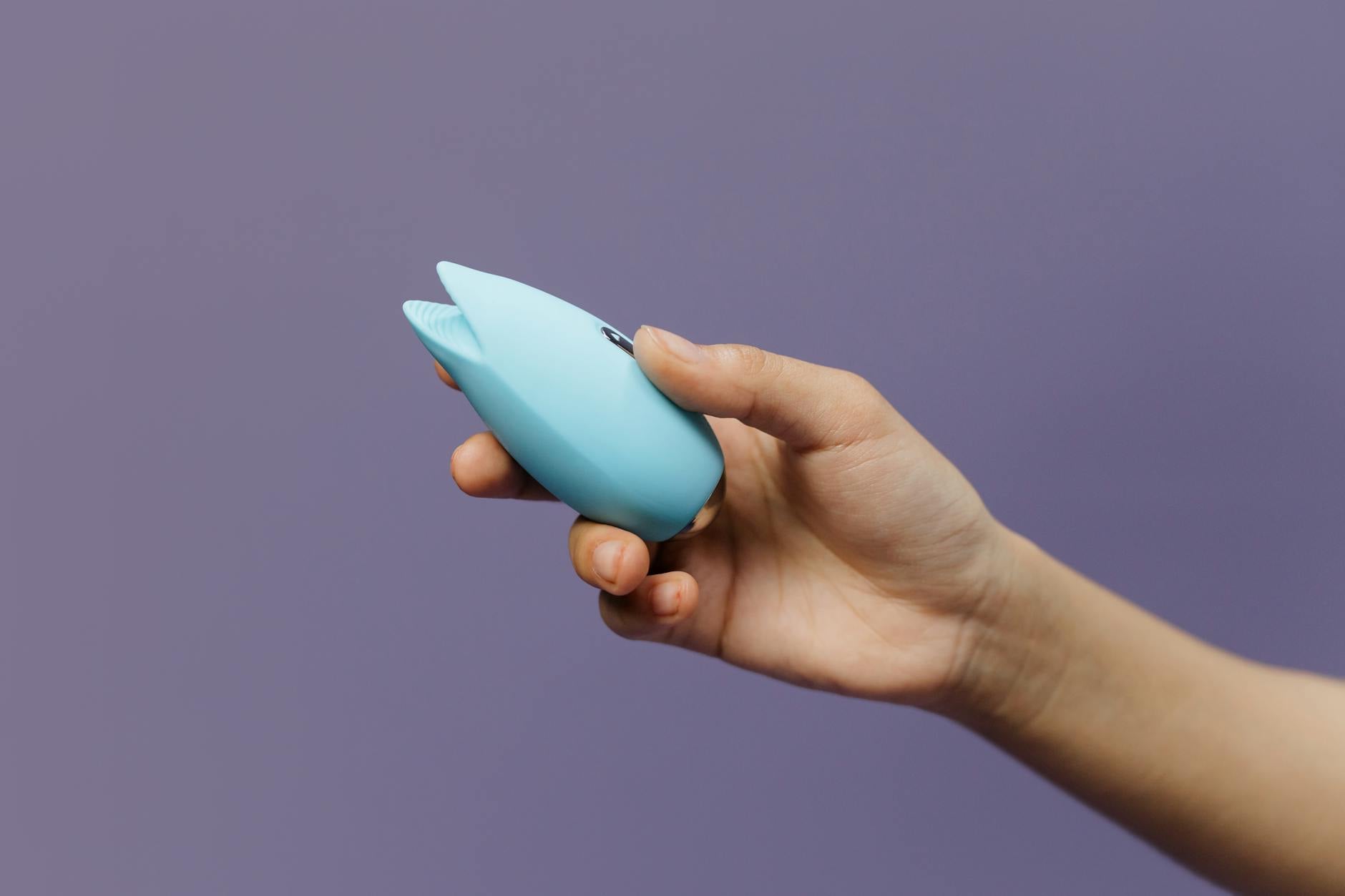
Lemon clitoral vibrators use gentle suction patterns that create sensation through pressure and rhythm rather than direct friction. This means the stimulation feels more consistent even as your baseline sensitivity swings. You get feedback from your tissue's actual state, not from a preset vibration intensity that may or may not match where your body is today.
For people experiencing post-birth-control hypersensitivity, starting at pattern 1 or 2 on a Lemon vibrator gives you room to build without overwhelming newly awakened nerve endings. For people experiencing the opposite (slower arousal), the suction mechanism pulls blood into tissue more effectively than vibration alone, often shortening the runway to arousal.
Many people also report that Lemon vibrators feel less jarring during the asymmetrical-sensation phase. The suction distributes pressure across the whole clitoral complex rather than targeting a single point.
The practical adjustment period
If you're switching from hormonal birth control to either non-hormonal contraception or nothing, give yourself permission for a two to three month exploration phase with pleasure. This isn't laziness. This is biological necessity.
Start with lower intensity than you're used to. If you were using a traditional vibrator at setting 5, begin with a Lemon clitoral vibrator at pattern 1 or 2. You can always increase. You can't un-overstimulate nerve tissue that's already raw.
Build warm-up time into your routine. Even if you didn't need it before, budget fifteen to twenty minutes now. This gives your nervous system time to catch up with sensation changes and lets arousal build at its new pace.
If your sensitivity is swinging across your cycle, try tracking it for one or two cycles. Note which days feel most responsive, which feel muted. This isn't about optimization. It's about meeting your body where it actually is instead of where you think it should be.
Water-based lubricant helps. Even if you never needed it before, the tissue changes that happen with birth control withdrawal sometimes mean lubrication shifts too. A good lube bridges that gap and makes sensation more consistent.
When to worry versus when to wait
Most sensation shifts after stopping birth control resolve within three months. If you're still experiencing significant numbness, pain, or complete inability to orgasm after four months, that's worth discussing with a gynecologist. Sometimes stopping hormonal birth control unmasks other issues that the hormones were masking (like pelvic floor tension, vestibulodynia, or other conditions that deserve proper diagnosis).
If hypersensitivity is genuinely painful or preventing you from having sex, that's also a conversation to have. You don't have to white-knuckle through it.
But if it's just different. If it's just slower or more intense or weirdly positioned. If it takes longer to come. That's normal. That's your actual baseline reasserting itself. And it usually gets better as your body settles into its new rhythm.
People often ask
How long does it take to adjust to clitoral sensation after stopping birth control?
Most significant changes happen in the first four to eight weeks. Complete stabilization typically takes two to three months, and full cycle-based sensitivity patterns take about three to four cycles to become predictable. Everyone is different though. Some people feel like themselves again in three weeks. Others take six months. Both are normal.
Can stopping birth control permanently change how my clitoris responds to stimulation?
No, not in a permanent way. Your clitoral sensitivity may settle at a slightly different baseline than it was on birth control, but that's actually closer to your true biological baseline. Think of it as recalibration, not damage. If you go back on hormonal birth control later, sensation will shift again.
Will a Lemon vibrator help if I'm experiencing numbness after stopping birth control?
Often yes, but not always immediately. Numbness in the first two to three weeks after stopping birth control is usually temporary as hormones flush out. If it persists beyond that, a Lemon clitoral vibrator's suction mechanism can help pull blood into tissue and restore sensation more effectively than traditional vibration. But if numbness lasts months, talk to your doctor.
Is it normal for one side of my clitoris to feel more sensitive than the other after stopping birth control?
Completely normal. This usually resolves on its own within a few weeks as blood flow redistributes evenly. Using a Lemon vibrator during this time can actually help because the suction stimulates the whole clitoral complex more evenly than a vibrator that targets a single point.
Should I switch sex toys after stopping hormonal birth control?
Not necessarily. But if your old toys feel either too intense or completely ineffective, experimenting with a different design makes sense. Lemon clitoral vibrators' suction-based approach feels different enough from traditional vibration that many people find them helpful during transitions. Try one, see how it feels, adjust from there.
What should I do if my orgasms feel completely different after stopping birth control?
First, know that different doesn't mean worse. Orgasms that take longer to build often feel more intense when they arrive. Orgasms that arrive faster often feel sharper. They're just different intensities and rhythms. Give yourself a few cycles to experience the new pattern before deciding you like or dislike it. And if you want to explore different stimulation approaches, this is actually a great time to experiment with tools like Lemon vibrators that feel notably different from what you were using before.
The bottom line
Stopping hormonal birth control reshapes your clitoral response in ways nobody talks about. But it's not a problem. It's your body returning to its actual baseline after years of chemical override. That baseline might surprise you. It might feel sharper or duller or just completely unfamiliar. It might vary across your cycle in ways you forgot (or never knew).
The point isn't to get back to how you felt on birth control. It's to meet this new version of your body with curiosity instead of frustration. Lemon clitoral vibrators, with their suction-based design, adapt especially well to shifting baselines because they respond to your tissue's actual state rather than demanding a preset response. Which means you can focus on exploration instead of troubleshooting.
Give yourself two to three months of grace. Use lubrication. Start lower and build up. And if something feels genuinely off after four months, talk to your doctor. But if it just feels different. That's just your body finding its way home.