
Okay so here's the thing about anxiety and pleasure
Your brain is wired to choose between two modes. Fight-flight-freeze, or rest-digest. Pleasure lives in rest-digest. The second your nervous system detects any threat, real or imagined, pleasure gets locked down. Full stop.
Performance pressure does exactly that. So does the voice in your head narrating your body like it's a sports commentary. "Is this working? Am I taking too long? What if they notice I'm not into this?" The moment you're narrating instead of experiencing, you've left your body. And anxiety loves that gap.
This is where lemon vibrators actually change the game. Not because they're magic. Because they work with how your nervous system actually functions.
Why traditional approaches to anxiety and pleasure fail
Most advice sounds like this: "Just relax." "Stop thinking so much." "Be present." Which is wildly unhelpful when your amygdala is in overdrive. Telling someone with anxiety to relax is like telling someone with a broken leg to walk it off.
The real problem is this. Anxiety-driven pleasure loss isn't a psychology issue first. It's a nervous system issue. Your body isn't getting a signal that it's safe to drop into arousal. No amount of mindfulness or couples' communication fixes that if your biology is stuck in red alert.
Clitoral vibrators, specifically lemon suction devices like those from Hello Nancy, bypass the need for that safety signal to arrive through your thoughts. They work directly on the nervous system instead.
How vibration actually rewires your threat response
When you use a lemon vibrator, three things happen simultaneously.
First, rhythmic stimulation creates predictable sensory input. Your brain loves predictability. It's literally calming because predictability signals safety. That's why people with anxiety often find white noise helpful, why repetitive exercise helps, why the same bedtime routine works.
Second, the intense localized sensation on your clitoris demands attention. You literally cannot narrate a sports commentary about your body when your entire nervous system is focused on a specific, intense sensation. It's not about forcing mindfulness. It's about giving your brain a more interesting signal to follow than the anxiety loop.
Third, and this matters most. Pleasure creates dopamine. Dopamine directly inhibits your amygdala. When your brain is busy producing pleasure chemicals, the anxiety-generating part of your brain gets quieter. It's biochemistry, not willpower.
This is why lemon clitoral vibrators work better for sensitive clitoral tissue. The suction pattern is consistent and focused. You're not managing variable pressure or worrying about finding the right angle. That removes another layer of performance pressure.
The partner play problem and how vibrators solve it
Here's where it gets interesting. A lot of anxiety around pleasure comes from the solo-versus-partnered split. When you're alone with a lemon vibrator, you own the entire experience. No narration, no performance expectation, no "am I taking too long." It's just sensation.
But when a partner is involved, anxiety often returns. Not because your partner is demanding anything. But because your nervous system switched back into "being observed" mode.
The solution isn't to avoid partner play. It's to integrate the tool that already works for your nervous system into partnered contexts. This is actually why choosing a lemon vibrator for partner play matters. You need something that reduces friction and performs consistently, not something that requires constant adjustment or feels awkward to share.
When both people know the device works and feels good solo, bringing it into partner sessions removes guesswork. Less guesswork equals less performance pressure. Paradoxically, adding a tool makes the experience feel more intimate, not less, because the pressure dissolves.
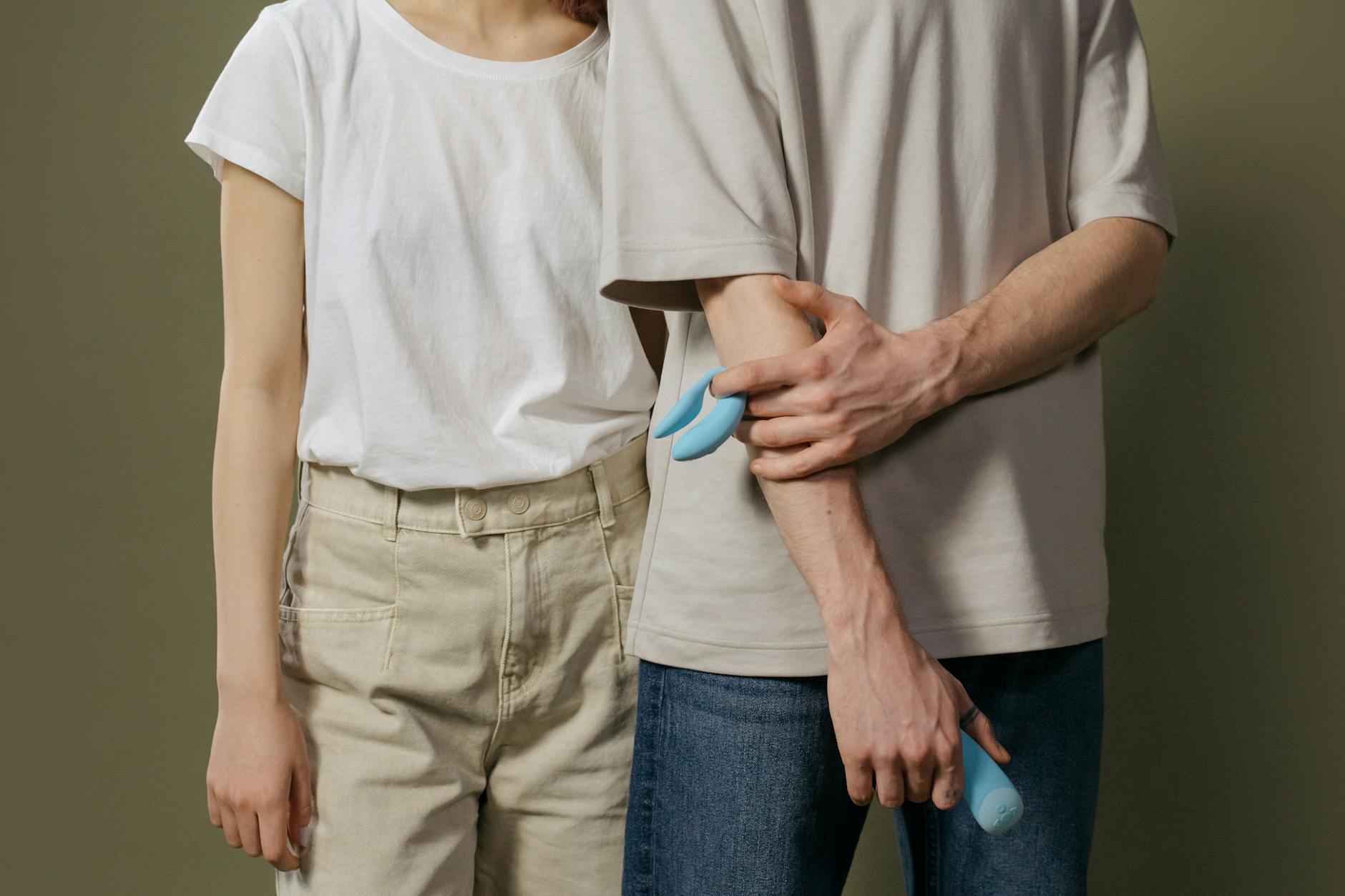
Photo by cottonbro studio on Pexels
The role of predictability in anxiety management
One thing I notice with clients who struggle with pleasure-killing anxiety is that they often gravitate toward "natural" or "unplanned" sex. The idea being that if it's spontaneous, the pressure is lower.
This rarely works. Anxiety doesn't care if sex is planned or spontaneous. What it cares about is whether your nervous system believes it's safe.
Structured self-pleasure with a lemon vibrator does something counterintuitive. It creates safety through predictability. Same device. Same sensations. Same outcomes. Your nervous system learns: "This situation produces pleasure consistently. It is safe."
That learned safety then generalizes. Not immediately, but over time. Your brain starts associating your body and pleasure with safety, rather than with the threat-alert your anxiety was running.
This is why consistency matters more than novelty when you're managing anxiety-driven pleasure loss. Use the same lemon vibrator. Same time of day if possible. Same location. Let your nervous system get bored and calm down.
What happens if anxiety is also showing up in your relationship
Sometimes the pleasure problem isn't just about anxiety and sensation. It's about whether you actually feel safe with your partner. Those are different things.
If you have generalized anxiety and decent relationship trust, vibrators help because they work on the nervous system level. But if your anxiety is actually relational, no device fixes that. That requires couples' work and communication, or potentially a relationship reassessment.
The test is simple. Do you feel anxious about pleasure solo? If yes, it's probably nervous system-based and lemon vibrators are genuinely useful. Do you feel anxious about pleasure specifically with your partner, even when solo works fine? That's relational, and it needs a different approach.
The orgasm is not the goal when you're managing anxiety
Here's the biggest mistake people make. They approach lemon vibrators or any pleasure tool as a performance target. "Will this make me come faster? Will this make it better?"
When anxiety is involved, that goal-orientation recreates the exact pressure that killed pleasure in the first place.
Instead, the goal is sensation. Just sensation. Can you feel the vibration? Is it pleasant? Can you let your mind follow the sensation for 30 seconds without narrating? That's the win.
Orgasms often follow when you stop demanding them and let your nervous system drop into rest-digest. But they're not the measure of whether a lemon vibrator is working for you. The measure is whether you can be in your body without anxiety narrating the experience.
When to talk to someone about the anxiety itself
Lemon vibrators and clitoral stimulation are genuinely helpful tools. But they're tools, not treatment.
If your anxiety around pleasure is severe, if it's part of a broader anxiety disorder, or if it's keeping you from all intimate connection, talk to a therapist. Cognitive behavioral therapy, somatic therapy, and other evidence-based approaches work. Vibrators are a useful companion to that work, not a substitute for it.
The combination is often most powerful. Professional support for the anxiety itself, plus a tool that rewires your nervous system's association with pleasure. That's when real change happens.
FAQ
Can a lemon vibrator actually cure anxiety-related pleasure loss?
No tool cures anxiety. But lemon vibrators can interrupt the cycle. They give your nervous system a new experience that doesn't involve threat or performance pressure. Over time, that teaches your system that pleasure is safe. That's not a cure. It's rewiring.
How long does it take to see a difference in pleasure with a lemon vibrator?
Some people feel the shift immediately because the sensation itself is so focused and intense that it naturally quiets the anxiety chatter. Others need weeks of consistent use before their nervous system stops anticipating threat. There's no universal timeline. Consistency matters more than speed.
Is using a lemon vibrator during anxiety a form of avoidance?
Not if you're still addressing the underlying anxiety. Using a vibrator to manage the nervous system while also getting support for the anxiety itself is smart. Using a vibrator to avoid ever thinking about or working on the anxiety is avoidance. The distinction is whether you're also doing other work.
What if my anxiety gets worse when I try to use a vibrator?
Stop. That means your nervous system is interpreting the situation as higher stakes, not lower. Sometimes adding a device makes the pressure feel bigger initially. If that's happening, slow down, go back to simple touch without any tools, and potentially talk to a therapist about what's triggering that response.
Can my partner help me with anxiety around pleasure?
Yes and no. Your partner can create a safe environment, communicate clearly, and not add pressure. But they can't fix your nervous system for you. The real work happens in your own body and your own attention. A good partner understands that and supports the process rather than making it about their involvement.
Should I tell my partner I'm using a lemon vibrator to manage anxiety?
That depends on your relationship and whether the vibrator stays solo or becomes part of partner play. If it's just for you, it's your call. If you think it might eventually be shared, honesty about why you're using it removes mystery and shame. Most partners actually appreciate knowing what helps.
The real thing that changes
Lemon vibrators don't heal anxiety. But they do something just as valuable. They prove to your nervous system that pleasure is possible without vigilance. That sensation can be intense and safe at the same time. That your body can feel good.
Once your nervous system learns that in one context, it starts generalizing to others. That's where the real shift happens. Not in the vibrator itself. In what your body begins to believe about pleasure and safety.
If anxiety has been killing your pleasure, this is worth trying. Solo, consistently, without any performance goals. Just sensation. Just your nervous system learning something new.
If you want to talk through what's happening or explore this more, we're here.