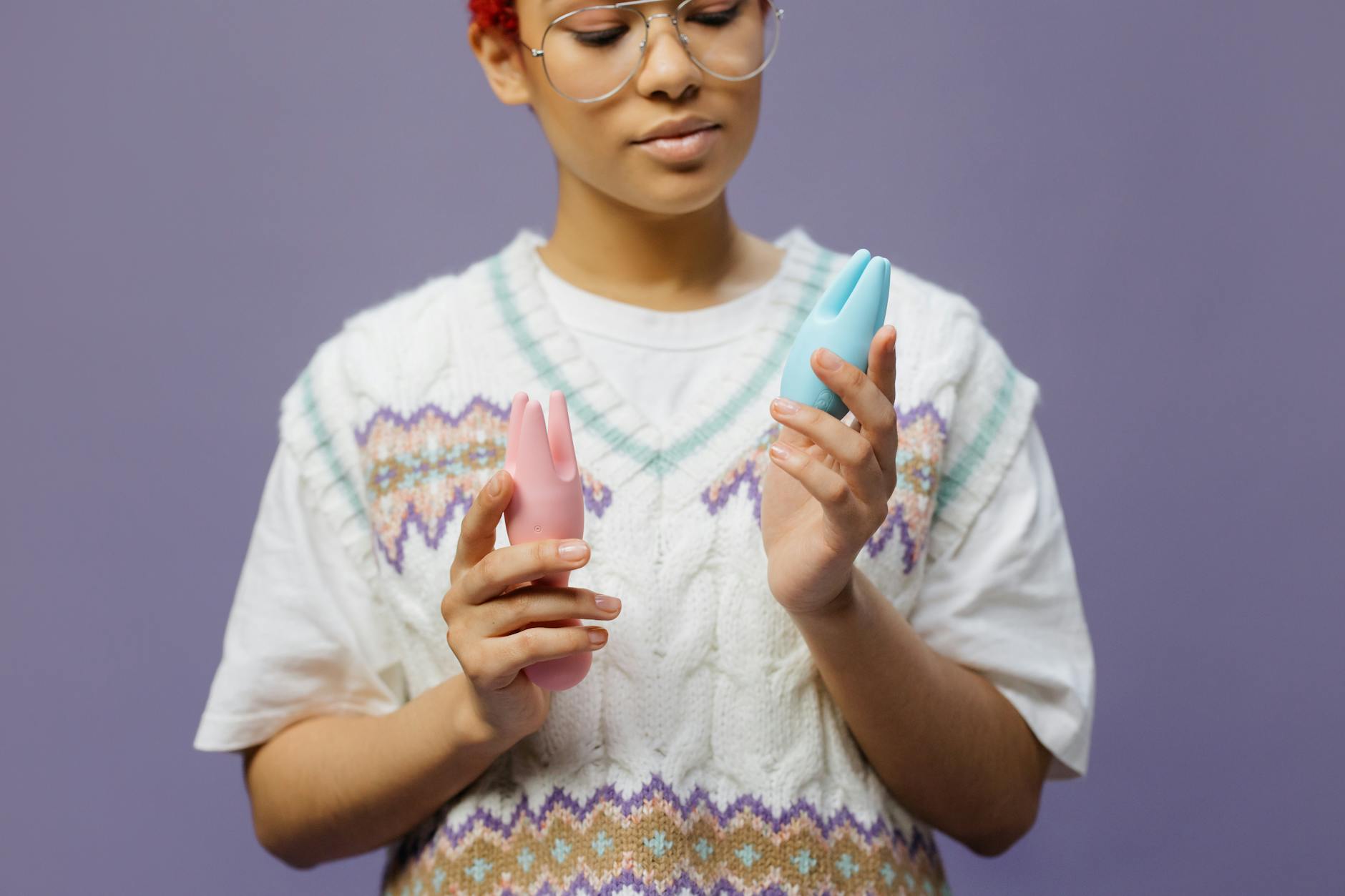
Here's the thing about desire in long-term partnerships
After years together, sex often becomes predictable. Not necessarily bad, but rhythmic in a way that leaves both people wondering if there's more. That flatness isn't a sign your relationship is broken. It's a signal that something in the dynamic needs to shift, and often that something is as simple as honest conversation plus a new tool that gives you both permission to explore differently.
A lemon clitoral vibrator isn't about fixing your partner or yourself. It's about creating a shared language around pleasure that you might not have had before. When introduced thoughtfully, lemon vibrators actually deepen partnered sex because they force you to talk about what you want in ways you've probably been avoiding for years.
Why partnered sex with a lemon vibrator feels different
Here's the neuroscience first, then the relationship part. When a partner uses a lemon vibrator on you, they're not being replaced by a machine. They're accessing a different role entirely. Your partner can focus on what's happening in your face, your breath, your sounds. They can kiss you, watch you, stay present while the vibrator handles consistent stimulation. That split of attention actually increases intimacy because someone is watching you experience pleasure instead of performing it.
From a physiological angle, a lemon clitoral vibrator creates more consistent stimulation than manual touch alone. That consistency means your nervous system can relax into the sensation instead of bracing for changes in pressure. When you're relaxed, your pelvic floor relaxes, blood flow increases, and orgasm becomes more accessible. Your partner feels that ease in your body, which changes their entire experience of partnered sex.
The other part is permission. Introducing any vibrator, especially one as elegant and intentional as a lemon vibrator, sends a signal: we are allowed to want things. We are allowed to ask for them. That permission radiates into every other conversation you'll have together.
The conversation you actually need to have
Most people introduce a vibrator wrong. They either drop it on the nightstand like a hint or order it secretly and surprise their partner, both of which trigger defensiveness instead of curiosity. Here's what works.
Pick a time that's not immediately before sex. Maybe Sunday morning coffee, a car ride, a walk. Low stakes. Say something like: "I've been thinking about our sex life lately, and I want us to feel more connected to what we actually want. I'm curious about trying a lemon vibrator together. Not because anything's wrong, but because I think we could both feel more pleasure and I'd like to explore that with you."
That's it. You've named the tool, the intention, and made it a team sport. You're not asking permission. You're inviting collaboration.
Your partner might say yes immediately. They might need to sit with it. They might have concerns, which are worth hearing. Common ones: "Will you prefer it to me?" or "Won't that make me feel inadequate?" Address these directly. A lemon vibrator doesn't replace your partner's touch, pressure, or presence. It adds a dimension that neither of you can create alone.
What changes in the bedroom
The first time is usually awkward because you're both hyperaware of what's happening. That's fine. Awkwardness fades with practice. By the third or fourth time, it becomes normal, then hot.
Start with your partner using the vibrator on you while you're facing each other. Let them control the pattern, the speed, the pressure. That gives them agency and keeps them engaged. After a few minutes, they might want to switch, or you might want to take over. That flexibility is the whole point. You're building a new skill together.
Most people discover that incorporating a lemon clitoral vibrator into partnered sex actually slows things down. Without the pressure to rush to orgasm, both partners can stay present longer. Your partner might use the vibrator for two minutes, then switch to kissing, then back to the vibrator. That rhythm builds arousal more effectively than either partner alone.
One practical note: communication doesn't stop once you introduce it. Check in during. "Does this feel good?" "Want me to go faster?" "Want to try a different pattern?" That continuous feedback loop is where the real intimacy happens.
The emotional stuff nobody talks about
Introducing any new element to sex can stir up old feelings. Inadequacy, shame, curiosity, excitement, guilt, relief. All at once. That's normal.
For the partner using the vibrator, there's often relief. If you've spent years trying to manually stimulate your partner in exactly the right way, a lemon vibrator means you can finally access what actually works. You're not guessing anymore. You can feel your partner's genuine response, not their polite one.
For the partner receiving, there's often vulnerability. Being directly stimulated by a partner (through a tool) requires letting them see and hear what actually gets you there. Some people have never given themselves that permission before. That's profound, and it's worth the temporary discomfort.
If one partner is significantly more interested than the other, that's information. Not a problem, just data. Some couples use a lemon vibrator once a month. Some use it regularly. Some buy it and don't use it for six months, then suddenly it becomes part of the rotation. All of that is fine. The point isn't the vibrator. The point is that you've opened a conversation about pleasure that probably wasn't happening before.
How this transforms longer-term patterns
After you've used a lemon vibrator together a few times, something shifts. You've proven to each other that pleasure is a conversation, not a fixed thing. That bleeds into everything else. You become more likely to ask for what you want outside the bedroom. You're less likely to assume your partner knows what you need. You've built a framework for mutual exploration.
Many couples report that using a lemon clitoral vibrator together actually increases spontaneous sex. That's because the pressure to perform perfectly disappears. If you know there's a vibrator in the nightstand and your partner can use it, you're more likely to start something without worrying that it won't work out. The stakes feel lower, so the ease feels higher.
Over time, lemon vibrators often become less about the vibrator itself and more about the permission it represented. You might use it less frequently, but the conversation it opened stays active. You're checking in more. You're asking for what you want. You're watching your partner experience pleasure instead of rushing through your own.
When things get complicated
Some partners have religious or cultural beliefs that make vibrators feel wrong. Some have trauma around sexuality that makes introducing new things triggering. Some are genuinely not interested in anything beyond what you already do, and that's okay.
If your partner says no, that's information, not a rejection of you. You get to decide what to do with that information. Some couples find a compromise. Some find that sexual incompatibility is actually a larger issue worth addressing with a therapist. Some find that one partner uses a lemon vibrator alone, and the other is genuinely fine with that.
What you don't do is sneak it, resent them for the no, or punish them by withdrawing. Those paths lead nowhere good.
If your partner says yes but then becomes withdrawn or critical during sex, that's also information. They might feel insecure. They might be comparing their body to the vibrator. They might need reassurance that has nothing to do with the tool itself. Name it. "I notice you seem distant. I want to make sure you're okay." Then listen.
The practical stuff
Choose a vibrator together, or at least tell your partner which one you're thinking about. A lemon clitoral vibrator like the Lem has a specific design that's worth understanding. Water-based lubricant (not silicone) works best. Start with lower intensity settings and work up. And absolutely, clean it after use every time. Pleasure that comes with UTI risk isn't worth it.
Store it somewhere you both know about, not hidden. That openness matters. It signals that this is a normal part of your shared sexuality, not something shameful.
The real reason it feels better with a partner
A lemon vibrator feels better with someone else in the room because pleasure is fundamentally relational. Even when you're using it alone, the thought of your partner created it, or your partner will use it with you later, or your partner supports your pleasure. That context matters.
When your partner is actually there, watching and touching and present, you're not just experiencing physical sensation. You're experiencing being desired while you're at your most vulnerable. That's the stuff that actually deepens attachment. That's what builds the kind of intimacy that lasts.
Start the conversation. Move slowly. Listen to your partner's real fears and desires, not the version you think they should have. Build this together, and watch what else shifts as a result.
People Also Ask
How do you bring up wanting to use a lemon vibrator with your partner?
Honesty and low stakes. Pick a calm moment outside the bedroom and say something like: "I've been thinking about ways we could both feel more pleasure together. I'm interested in trying a lemon vibrator. I'd love to know what you think." Avoid phrasing it as a hint or a complaint. Make it collaborative, not accusatory.
Will my partner feel inadequate if I want to use a vibrator during sex?
Possibly at first, but that feeling usually fades with communication and repetition. The key is framing it accurately: a vibrator isn't a replacement for your partner's touch, it's an addition that lets both of you experience pleasure differently. Many partners actually feel relief because the pressure to be the sole source of stimulation lifts. If your partner continues to feel insecure, that's worth exploring deeper, possibly with a therapist.
Can a lemon clitoral vibrator improve orgasm quality during partnered sex?
Yes. Consistent stimulation from a lemon vibrator, combined with your partner's presence and touch, often creates stronger orgasms than either alone. The combination of physical sensation, emotional connection, and the permission that introducing a new tool represents all work together. Most people report more intense or more frequent orgasms once they get comfortable using a vibrator with a partner.
What's the best way to use a lemon vibrator during penetrative sex?
This depends on positioning and what feels good to both of you. Many couples use a lemon clitoral vibrator before penetration to increase arousal and ease, then set it aside. Others use it during, with your partner controlling it while inside you, or while you're inside your partner and they use it on themselves. There's no one right way. Experiment and talk about what feels best.
Should you use a lemon vibrator every time you have sex with a partner?
Not unless you want to. Some couples integrate it regularly. Others use it occasionally. Some buy one and then let it sit for months before pulling it out again. The vibrator is a tool for expanding your options, not a requirement. Use it when it feels right for both of you, and talk about what that rhythm looks like.
How do you know if your partner is actually comfortable with a lemon vibrator?
Watch their body and listen to their words. Are they present and engaged, or distant? Are they asking questions and experimenting, or going through the motions? Real comfort shows up as curiosity and ease. If you're getting yes but feeling no, name that. "You seem hesitant. Are you actually okay with this?" gives your partner space to be honest.
Moving forward
Introducing a lemon vibrator to partnered sex isn't about saving a broken relationship or proving that your partner isn't enough. It's about deciding that mutual pleasure matters enough to have the uncomfortable conversation. It's about building a framework where both of you can ask for what you want and know you'll be heard.
That foundation changes everything. Start there, move slowly, and watch what emerges when pleasure becomes something you're building together instead of something one person is supposed to figure out alone. Your relationship will thank you.