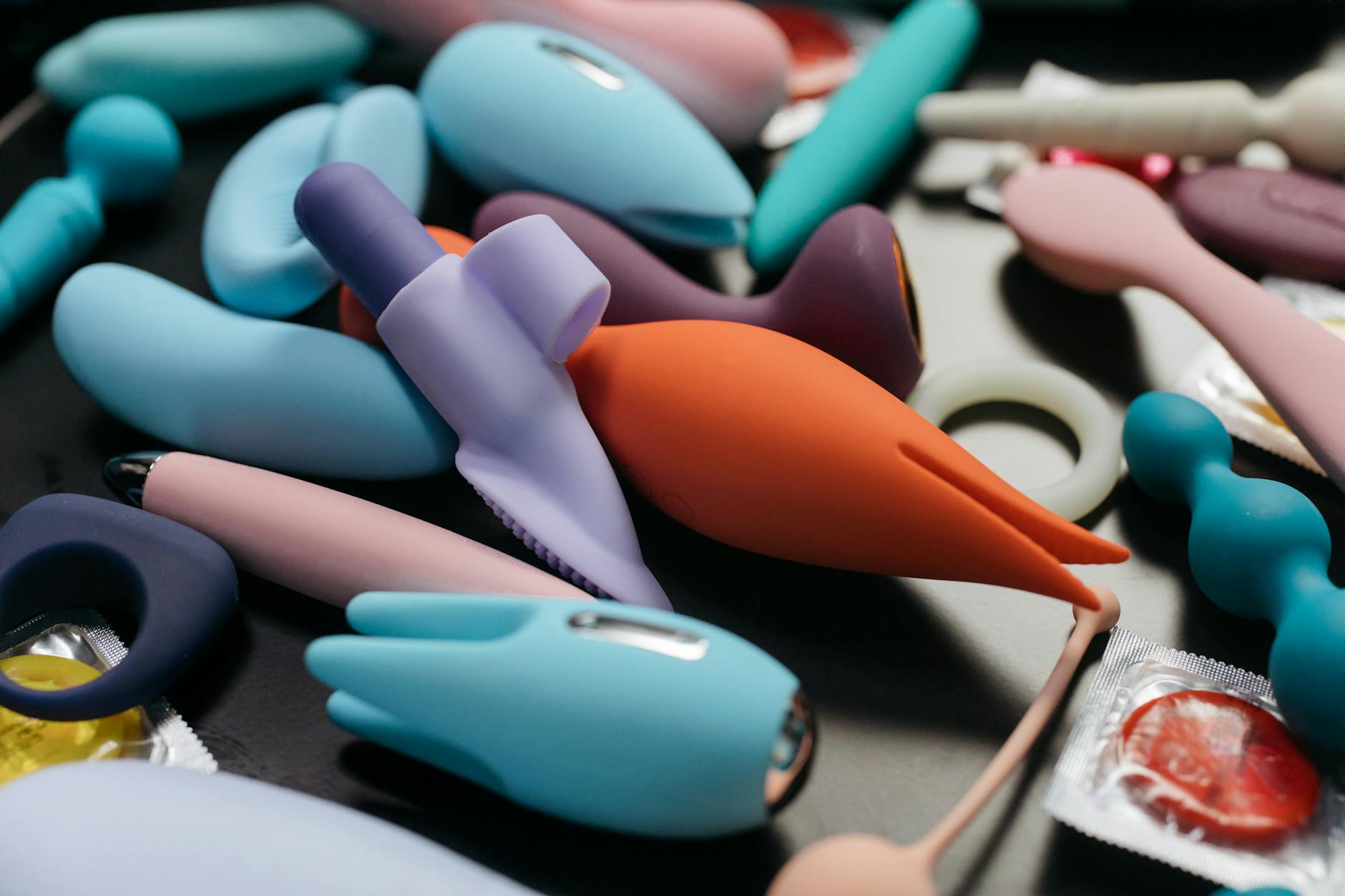
Why some clitorises rebel against regular vibrators
Let's be real. If direct vibration makes your clitoris feel numb, sore, or weirdly painful instead of pleasurable, you're not broken. You're not too sensitive in a weakness way. Your body is actually doing exactly what it's supposed to do.
Your clitoris has about 8,000 nerve endings concentrated in a space smaller than a pea. When a traditional vibrator hits it head-on with rapid oscillation, those nerves can get overwhelmed. The same stimulation that sends one person into orbit can send another person's nervous system into protection mode. Both responses are normal. Both are biological.
The problem isn't your sensitivity. It's the wrong tool.
How suction changes the game entirely
Lemon vibrators work differently than standard clitoral vibrators. Instead of direct buzzing friction, they use gentle suction combined with pulsing patterns. Think of it less like a vibrator and more like a cupped hand that's softly squeezing and releasing around the clitoral area, except it's precise and consistent.
This matters neurologically. When suction stimulates your clitoris, it engages different nerve pathways than direct vibration does. The sensation spreads across a wider area instead of concentrating pressure on the most sensitive tip. Many people with hypersensitive clitorises report that this actually creates stronger, more satisfying orgasms than they ever got with traditional vibrators.
It's not magic. It's anatomy.
The sensitivity paradox
Here's what confuses people: a highly sensitive clitoris often responds better to intense stimulation, not less. But that intensity has to come through the right channel.
Imagine someone running their finger directly over your clitoris versus gently cupping it and creating suction. Same intensity of sensation, completely different nerve firing. With a lemon clitoral vibrator, you can turn up the suction and pulse strength and feel building pleasure instead of grinding irritation. The sensation compounds instead of overloads.
I've worked with hundreds of people who thought they couldn't come with a vibrator at all. They tried one or two cheap buzzing toys, felt that overwhelming numbness, and decided their body just wasn't wired for vibrator pleasure. Then they tried a lemon vibrator. Within minutes, they understood the difference.
Why traditional vibrators overstimulate sensitive tissue
Most vibrators oscillate between 4,000 and 10,000 times per minute. That's a lot of direct stimulation happening in a very small area. For some nervous systems, that rate of input triggers a protective response. Your clitoris essentially goes numb as a way to shield itself from overstimulation.
The lemon suction vibrator changes the frequency and the type of contact. Suction-based stimulation doesn't numb the same way because it's not overloading the same neural pathways. It feels more like a rolling sensation with pulses of pressure and release, rather than constant buzzing.
If you've experienced numbness with vibrators, it's not that you need to go faster or harder. You need to change the stimulus entirely. That's where lemon vibrators shine for sensitive clitorises.
What happens to your nervous system during suction
When your clitoris experiences suction, your parasympathetic nervous system responds differently than it does to vibration. Suction feels more like touch and pressure, which your body recognizes as safe. Traditional vibration sometimes triggers a subtle alarm response in people with sensitivity.
The pulsing patterns in a lemon vibrator can actually help calibrate your nervous system to pleasure instead of protection. Many people find that regular use retrains their body to accept intense stimulation without triggering that numb response.
This is why consistency matters. After using a lemon clitoral vibrator for a few weeks, some people find their clitoris becomes more responsive overall. The nervous system learns that this type of sensation is safe, welcome, and leads somewhere good.
Building arousal without the burnout
With traditional vibrators, sensitive people often face a frustrating pattern: the buzz gets intense fast, then hits a plateau, then fades. You're not bored. Your nervous system is exhausted.
Lemon vibrators let you build arousal gradually. You start with lower suction settings and gentle pulse patterns. Your body warms up. Blood flow increases to the clitoris. Then you can gradually increase intensity without that cliff where numbness kicks in.
The result is typically longer, more sustained arousal and stronger orgasms. Because your nervous system never goes into protection mode, you don't lose sensation partway through. You build on it.
Lubrication matters less, but comfort matters more
With suction, you need less lubrication than you might think. The seal does most of the work. But comfort around how you hold the toy and position it matters hugely.
If you have a sensitive clitoris, precision positioning is your friend. Rather than rubbing a vibrator around trying to find the spot, you can place a lemon vibrator in one position, engage the suction, and adjust from there. This level of control helps you avoid overstimulation zones and find the exact angle that feels best.
Many people with sensitive clitorises prefer using a lemon vibrator solo or with a partner controlling the settings, rather than trying to manage it themselves while also managing arousal.
Testing your sensitivity baseline
Before you try a lemon vibrator, it helps to know what intensity actually works for you. Here's a simple test: use your fingertip to circle your clitoris. Notice the pressure that feels good versus overwhelming. Too light and it doesn't register. Too firm and it becomes uncomfortable. That midpoint is your sensitivity baseline.
When you first use a lemon vibrator, start at the lowest suction setting. Place it and turn it on. Notice how your body responds. Most people with sensitivity find that they can comfortably use lemon vibrators at medium settings, whereas they'd never tolerate medium on a traditional vibrator.
Give yourself permission to start low. Pleasure builds, and your nervous system learns faster when you're not fighting protective responses.
The solo play difference
If you're exploring lemon vibrators alone, the learning curve is gentler. You control pace, pressure, and intensity entirely. You can pause whenever numbness threatens. You can switch patterns on the fly.
Many people with hypersensitive clitorises find they actually prefer solo exploration with a suction toy to partnered play with traditional vibrators. The consistency and control let you go deeper into pleasure without worrying about overstimulation.
When to consider professional guidance
If your clitoris is so sensitive that even gentle touch causes pain or extreme discomfort, that's worth mentioning to a gynecologist or pelvic floor specialist. Vulvodynia and other nerve conditions are real and deserve professional evaluation. A lemon vibrator can help with general sensitivity, but it's not a treatment for pain conditions.
For straightforward hypersensitivity (where sensation just feels overwhelming rather than painful), lemon vibrators consistently work well. But if you're dealing with actual pain, get that checked first.
FAQ: Common questions about lemon vibrators and sensitive clitorises
Why do lemon vibrators feel less intense than traditional vibrators if they're stronger?
They're not actually weaker. They're different. Suction spreads stimulation across a wider area, so even though the total sensation is intense, it doesn't concentrate overstimulation on one tiny nerve bundle. Your clitoris feels more, not less. It just doesn't overload.
Can I use a lemon vibrator if my clitoris is sensitive to everything?
Most likely yes, but start with the lowest settings. The gradual approach works better with sensitivity. If even gentle suction feels overwhelming, your sensitivity might have another cause worth exploring with a doctor.
How long does it take before my clitoris stops feeling numb with a lemon vibrator?
Many people notice a difference within the first few uses. Within a week or two of regular use, most people with sensitivity report that their clitoris feels more responsive overall. Your nervous system adapts faster than you'd expect.
Do I need to use lube with a lemon vibrator if I'm sensitive?
Lube helps, but it's less essential than with traditional vibrators. The seal does most of the work. Water-based lube works best if you do use it, since most lemon vibrators are silicone and silicone lube can degrade the material.
Can a partner use a lemon vibrator on me if I have a sensitive clitoris?
Absolutely, and many sensitive people actually prefer this because a partner can read your responses and adjust in real time. Communication is key. Tell your partner to start low and ask for feedback rather than guessing at intensity.
What if a lemon vibrator still feels overwhelming?
Try the absolute lowest setting and shortest session. Five minutes at setting one might be all you need. You can also try using it over your underwear first, which dulls sensation slightly. Some people with extreme sensitivity benefit from that muffled feeling while their nervous system learns to accept the stimulation.
The bottom line
If traditional vibrators have never worked for you because they cause numbness or overstimulation, you haven't found the right tool yet. A lemon clitoral vibrator offers a fundamentally different type of stimulation that works beautifully for sensitive clitorises. The suction-based approach bypasses the overload response that traditional vibration triggers in many nervous systems.
Your sensitivity isn't a flaw. It just needed the right match. When you find it, the difference is remarkable.