When touch stops, everything stops
Emotional distance in a relationship doesn't announce itself. It creeps in during the small moments. You stop reaching for each other's hands. Sex becomes less frequent, then mechanical, then absent. You're in the same room but living separate lives. Most couples I work with describe it as "we just stopped talking about this stuff," which is true. But underneath that is something more fundamental: they stopped touching.
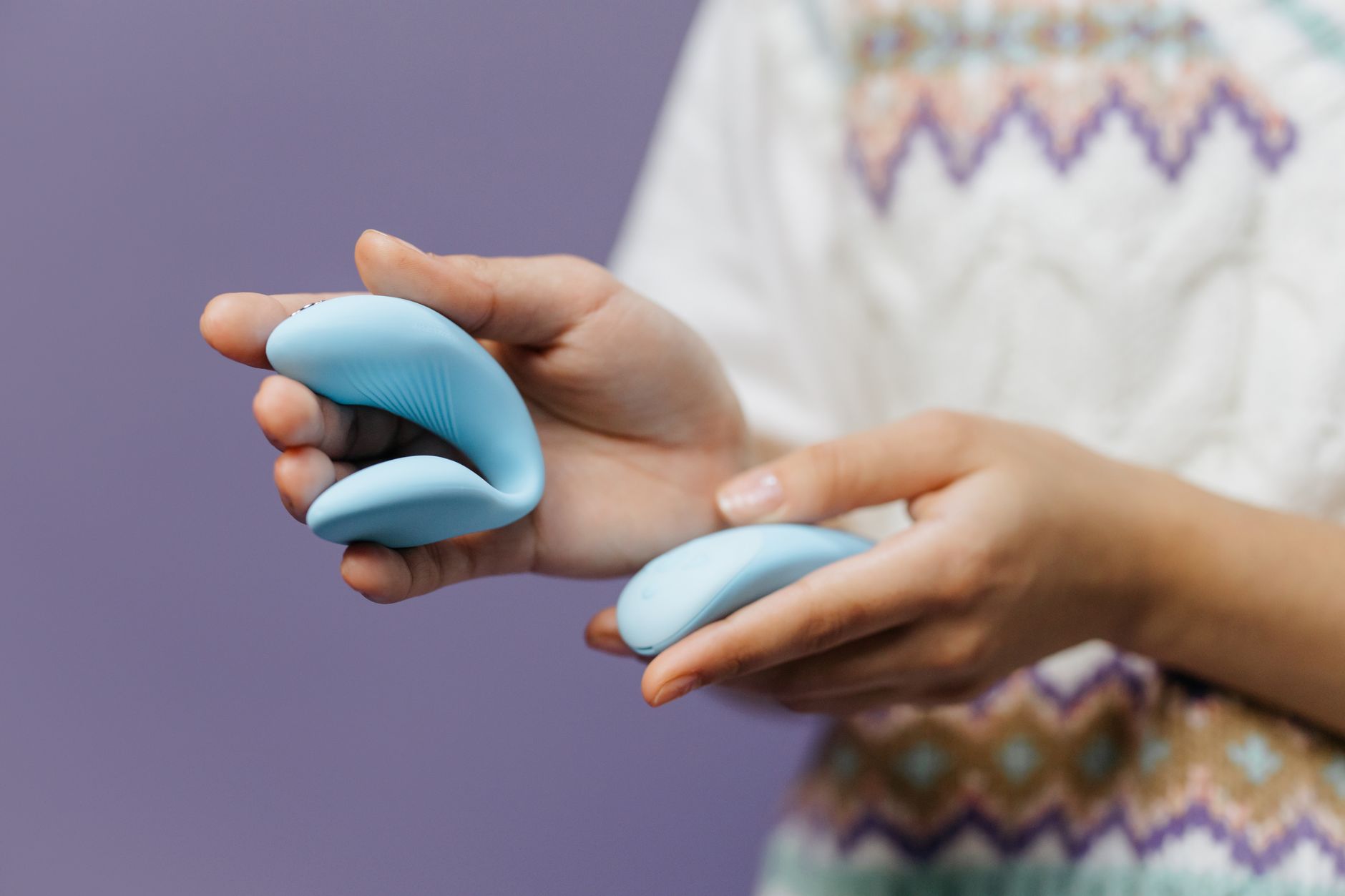
Here's what I've observed across decades of working with couples: reconnecting physically often has to happen before you can reconnect emotionally. It feels counterintuitive. Shouldn't you resolve the underlying conflict first? Rarely. When emotional distance has calcified, trying to talk about it feels heavy. It triggers defensiveness. But bringing a lemon vibrator into the bedroom shifts something. It removes the pressure to perform intimacy you don't quite feel yet, and it creates novelty in a space that's felt routine or absent.
Why emotional distance kills desire in the first place
When couples grow distant, desire doesn't just disappear because of hormones or age. It disappears because vulnerability requires safety, and emotional distance feels like danger. Your nervous system knows the difference between "we're having sex" and "we're connected."
Three things happen when emotional distance takes hold:
The performance trap. You try to initiate sex, it feels awkward, so you don't try again. Your partner feels rejected. You feel anxious about initiating. The cycle worsens. Sex becomes something you're both avoiding because the stakes feel too high. A lemon vibrator (or any external tool) breaks this loop because it's not about proving love. It's about curiosity.
Sensory numbness. When you're not emotionally present with a partner, physical touch feels distant too. You can have an orgasm but not feel connected. This feedback loop makes you both question why sex matters at all. The disconnect becomes normalized.
Permission collapse. Emotional distance often means you've stopped asking each other what you actually want. You assume you know. You assume the other person isn't interested. You're both quietly resentful. A lemon clitoral vibrator, introduced collaboratively, becomes a way to say "I want to know what you enjoy. I want to explore this with you." That reframe is enormous.
The neurological reset that happens when you introduce something new
When you bring a lemon vibrator into a connection that's gone stale, you're not just adding a toy. You're introducing novelty, which floods your brain with dopamine and activates curiosity circuits that have been dormant.
I often tell couples: "Your nervous system has learned that sex with this person means the same thing it's meant for ten years. That's not boring because the person is boring. It's boring because your brain predicted the entire experience three minutes in. Novel stimulation wakes that up."
A lemon vibrator works specifically well here because:
It removes performance pressure. Neither partner has to "do" anything perfectly. You're both discovering together.
It centers pleasure as collaborative. When one partner experiences intense sensation, the other partner is watching and participating. That's connection. That's intimacy.
It gives you something to talk about. "Did you like that pattern?" "Should we try lower or higher?" Suddenly you're communicating about desire in real time. That skill transfers everywhere.
How to introduce this without it feeling clinical
Here's what doesn't work: buying a lemon vibrator in secret, waiting for a romantic moment, and presenting it. That reads as "I'm fixing something wrong with you," which triggers shame and defensiveness.
What works:
Start the conversation outside the bedroom. "I've been thinking about us. I miss exploring together. Would you be open to trying something new?" That's it. No apology. No diagnosis. Just honesty.
If your partner is hesitant, don't sell them on the toy. Sell them on the idea. "I want to rediscover what turns you on. I want that to matter to us again." Most resistance softens when someone realizes their partner actually wants them.
Watch videos or read guides together if that feels easier than talking. Removes the awkwardness of the initial conversation.
Start slow. A lemon vibrator doesn't have to mean penetrative sex or anything performance-heavy. Try it during foreplay. Try it while you're just holding each other. Let it be playful first, serious later.
What happens in the body when emotional intimacy and physical pleasure converge
Here's the neuroscience part that actually matters: when you're physically stimulated by something that feels pleasurable, and you're emotionally present with another person, your brain releases oxytocin, dopamine, and serotonin simultaneously. That's the neurochemistry of bonding.
A lemon vibrator accelerates this because it's not dependent on your partner's skill or your partner's presence. It's a reliable source of pleasure you can experience together. That removes a huge amount of performance anxiety that couples in emotional distance usually carry.
I've had couples tell me: "We started using a lemon vibrator and suddenly sex wasn't about proving we still cared. It was about caring while exploring together." That distinction is everything.
The conversation that has to happen alongside the toy
Here's what I always emphasize: a lemon vibrator is not a substitute for addressing the underlying emotional distance. It's an accelerator. It gets you back into your body and into curiosity together, which makes the harder conversations possible.
After using a lemon vibrator together a few times, vulnerability often becomes easier. You've reminded your nervous system that this person can be trusted with your pleasure. That's the same nervous system that needs to trust them with your feelings.
Use that window. After physical reconnection, the conversation might feel like: "I realized how much I've missed this," or "I didn't know how disconnected we'd become until we were close again." These aren't the conversations you force over dinner. They emerge naturally after reconnection.
Why the lemon vibrator specifically helps couples rediscover each other
A lemon clitoral vibrator has a few advantages in this specific scenario. The sensation is intense but not overwhelming, which means you're not numbing out into pure sensation. You stay present. You can talk. You can make eye contact. You can pay attention to your partner's reactions.
It's also not positioned as "equipment for performance." It's a tool for pleasure discovery, which is emotionally lighter than, say, something associated with "fixing" a specific issue. You're not medicating a problem. You're exploring something together.
Many couples find that using a Hello Nancy lemon vibrator gives them permission to be playful in a space where they've been serious. Playfulness is bonding. Playfulness is what you had before emotional distance showed up.
The timeline for reconnection
I want to be realistic: using a lemon vibrator doesn't instantly fix a relationship in emotional crisis. But it does something equally important. It proves that reconnection is possible. It reminds both partners what physical safety feels like with each other.
Most couples I work with report that after introducing collaborative pleasure tools, they feel noticeably more connected within 2-4 weeks. Not because the toy is magic, but because they've broken the avoidance cycle and created a space for vulnerability again.
The real work is the conversation afterward. The willingness to stay curious about each other. The lemon vibrator just gets you to the threshold.
What happens when one partner is hesitant
Sometimes one partner is ready to reconnect and the other is still protective. "I don't think this will help," or "I'm not sure I want this right now." That's real, and it matters.
Don't push. Instead, ask what would make them feel safer. Sometimes it's not the toy. It's the reassurance that reconnecting doesn't mean pretending the distance didn't happen. You're not erasing the hurt. You're choosing to move through it together.
If emotional distance has calcified into resentment or infidelity, a lemon vibrator isn't the first step. Professional support is. I say this as someone whose entire career is built on helping couples reconnect. Some things need more than novelty and touch. They need actual repair work.
How to keep the reconnection going
Once couples start using a lemon vibrator together, the temptation is to fall back into routine. You reconnect for three weeks and then it becomes another thing you do once a month.
To sustain the shift: keep communicating about pleasure. Try different settings. Switch it up. Make it weird. Couples who maintain reconnection aren't the ones who use the toy religiously. They're the ones who stay curious about each other.
Physical reconnection is the doorway back to emotional intimacy. A lemon vibrator is just the key.
People also ask
Will using a vibrator feel like I'm admitting something is wrong with our relationship?
Not if you frame it right. If you approach it as "I want us to explore together," it's an addition to intimacy, not a diagnosis of failure. Most couples who successfully reconnect see the tool as a choice they made together, not evidence of brokenness. The frame matters more than the toy.
What if my partner thinks introducing a toy means I'm not satisfied with them?
This is a common fear, and it usually comes from both people. Have that conversation directly. "I'm attracted to you. I also think we've both stopped exploring. I want to do that together, and I want it to feel adventurous, not like I'm looking elsewhere." Curiosity about pleasure isn't infidelity. It's the opposite.
How often should couples use a lemon vibrator while reconnecting?
Frequency matters less than consistency. Every week is realistic if you're serious about reconnection. But I've also seen couples benefit from once every two weeks if they're using that time intentionally. Quality over frequency. The moment you're using it to check a box, the emotional benefit disappears.
Can we use a lemon vibrator if we have different desire levels?
Absolutely. In fact, couples with mismatched desire often find that a lemon vibrator helps because it removes the pressure on the lower-desire partner to perform and the higher-desire partner to initiate. You're both participating in something new, which is often less fraught than your established sexual pattern.
What if we try this and it doesn't help our relationship?
Then you know you need support beyond novelty. A lemon vibrator is a tool for reconnection when couples are still willing. If it doesn't spark anything, the distance might be rooted in something that needs actual therapeutic work. That's not a failure. That's information. And it's still worth pursuing with professional help.
How do I talk to my partner about this if we've been distant for a long time?
Start with vulnerability, not solutions. "I miss us. I miss being close to you. I want to find our way back, and I'm not sure how. Can we try something together?" That's not a pitch for a toy. That's a genuine invitation. The toy comes after they say yes to reconnection.