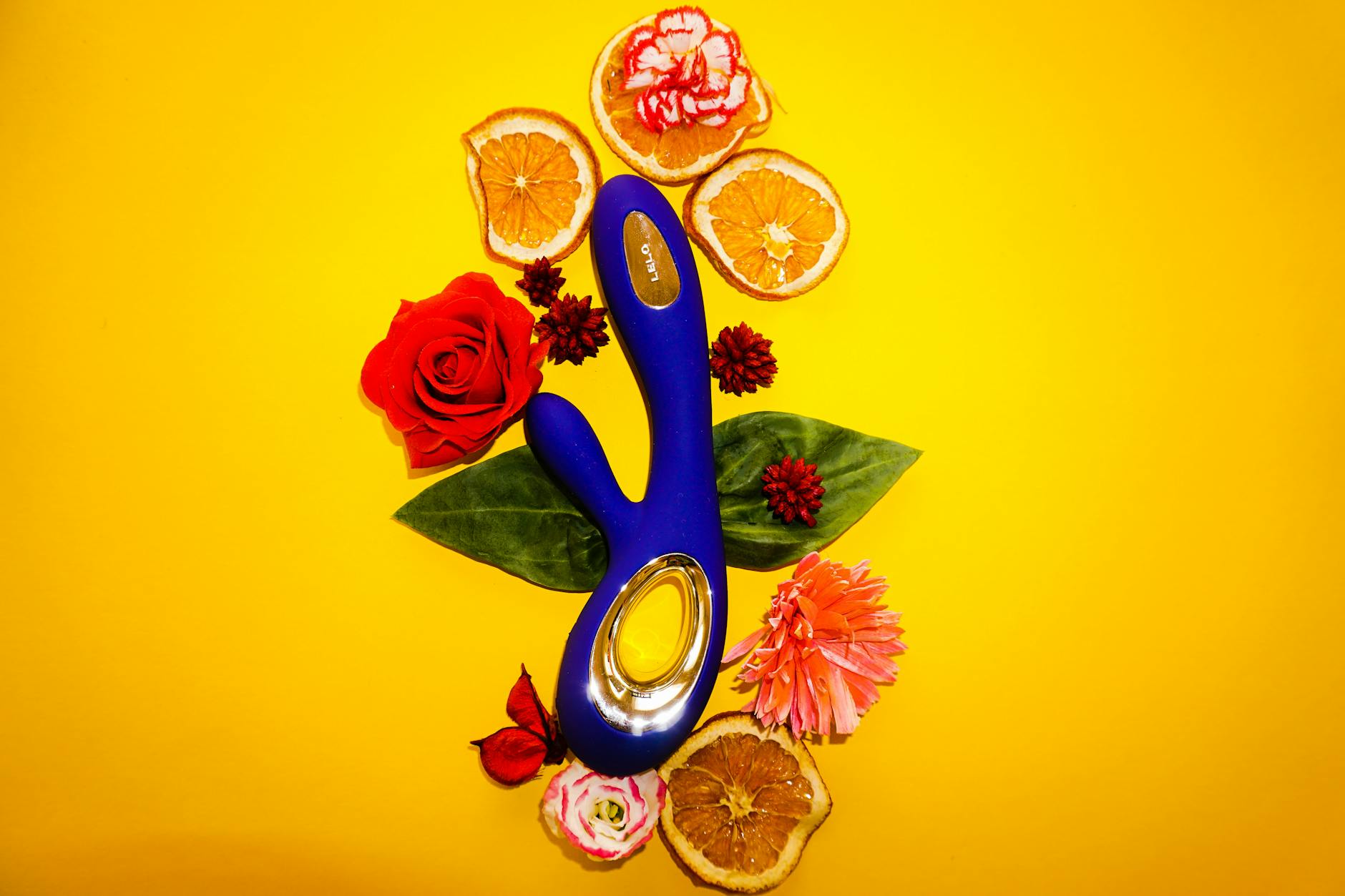
Here's the thing about pain thresholds and pleasure
Let's be real: if touch hurts, you're not going to keep going back for more. And if you've spent months or years managing a lower pain threshold, whether from medical trauma, chronic pain, anxiety, or just plain old sensitivity, the idea of using a vibrator might feel intimidating instead of exciting.
The good news is that most traditional vibrators are built on the wrong assumption. They assume everyone wants aggressive, high-frequency buzz. But that's not what a lower pain threshold needs. It needs something that builds sensation without assault.
That's where lemon vibrators shift the game. Instead of vibration, they use gentle suction. This matters more than you'd think.
Why traditional vibrators can feel overwhelming
Most clitoral vibrators work through direct friction and fast oscillation. They're essentially buzzing against sensitive tissue. For a lot of people, that's blissful. For others, especially those with lower pain thresholds, it can feel too sharp, too intense, or just wrong.
Think about the difference between a light tap and a heavy knock on a door. Both make contact. One feels welcome, the other feels like an intrusion. Your body isn't being difficult when it rejects standard vibrators. It's communicating a valid boundary.
Sensitivity after trauma, during chronic pain flares, or just as part of your baseline neurophysiology deserves accommodation. Not workarounds. Not powering through. Accommodation.
How lemon suction technology changes the experience
Lemon clitoral vibrators use a technology called air-pulse suction. Instead of vibrating against your clitoris, they create a gentle, rhythmic suction sensation. The difference in sensation is significant.
Suction stimulates without the same mechanical impact. It's almost like your clitoris is the focus of attention rather than being hammered by vibration. The sensation builds gradually and feels more like a wave than a shock.
For people with lower pain thresholds, this changes everything. You get stimulation without the sensory overload. You get intensity without the harshness. And you get to control the progression instead of being hit with maximum buzz on pattern one.
Starting slow and building up
One of the biggest gifts of lemon vibrators for sensitive bodies is that you can actually start at the beginning. Most traditional vibrators have a learning curve that feels like jumping into the deep end.
Lemon clitoral vibrators typically have multiple patterns and intensities. Start at pattern one, the gentlest setting. Spend time here. Not minutes. Give yourself permission to stay in the low-intensity space until your body feels ready to move forward. Some days you'll stay here. Other days you'll explore patterns two or three. That's not failure. That's listening.
The suction technology means that even at lower settings, you're getting real sensation. You're not sacrificing quality for gentleness. You're getting stimulation that respects your nervous system.
Building trust with your body after sensitivity
When your body has been in pain or has reacted poorly to touch, rebuilding pleasure takes time. It takes gentleness. It takes a tool that doesn't ask you to override your own signals.
Using a lemon vibrator slowly and with permission creates something important: evidence that not all stimulation will hurt. Each time you use it gently and it feels good, your nervous system gets a small update. Touch does not always equal pain. Sensation does not always mean harm.
This is why rhythm matters as much as intensity. When you're using a lemon suction toy, the predictable pattern of sensation is itself soothing. Your body knows what's coming. There are no surprises. That predictability is calming to nervous systems that have been knocked around.
The difference suction makes for tense pelvic floors
People with lower pain thresholds often carry tension in the pelvic floor. It's a protective reflex. When you're guarding against pain, everything down there tends to clench.
Traditional vibration can actually increase this tension because your body perceives it as something to resist. Suction, though, tends to have the opposite effect. It creates a pulling sensation that some people describe as almost magnetic. It draws the tension out rather than fighting against it.
This doesn't happen overnight. But over time, as you use a lemon clitoral vibrator gently and your pelvic floor learns it's safe, that baseline tension often softens. You're not forcing relaxation. You're creating conditions where relaxation becomes possible.
Recognizing when you need external support
Sometimes a lower pain threshold is just your baseline. Sometimes it's a sign that something medical needs attention. If penetrative touch causes sharp pain, if you have burning sensations, or if pain appeared suddenly, get it checked. This isn't a toy problem. This is a medical conversation.
Conditions like vulvodynia, vaginismus, endometriosis, and pelvic floor dysfunction all show up as pain or extreme sensitivity. A lemon vibrator can be part of healing alongside proper treatment, but it's not a substitute for a pelvic floor physical therapist or gynecologist who specializes in pain.
What I'm talking about here is the difference between baseline sensitivity and pain that signals something is wrong. One is about finding the right tool. The other is about finding the right care.
Practical tips for using lemon vibrators with a lower pain threshold
Start with water-based lubricant even if you think you don't need it. It reduces friction and makes the suction sensation feel smoother. Your clitoris doesn't have to be hard to respond. Arousal and sensation build gradually.
Give yourself permission to use the toy without the goal of orgasm. Sometimes the point is just sensation. Just pleasure. Just your body learning it's safe. Orgasm can follow later. For now, notice what feels good at pattern one. That's the entire assignment.
Set a timer. Give yourself 10 or 15 minutes with no pressure to achieve anything. When the timer goes off, you're done. This takes the performance anxiety out of it. Your only job is to explore what feels okay.
Use it solo first. Not because partnered sex is bad, but because you need space to figure out your own signals without worrying about anyone else's experience. Once you know what works, you can bring a partner into it if you want.
Why lemon vibrators are different
Lemon sexual toys and lemon adult toys are built on a philosophy that not everyone wants the same thing. The lem vibrator, specifically, was designed with this understanding. It doesn't assume you want buzz. It offers something gentler.
This matters if you've spent years thinking you were broken because traditional clitoral vibrators didn't work for you. You're not broken. You just needed a different technology. You needed something that respected your nervous system instead of asking it to adapt.
Pleasure isn't one-size-fits-all. Your lower pain threshold isn't a defect. It's information. And now you have a tool that listens to that information.
FAQ
Can I use a lemon vibrator if I have vulvodynia?
Vulvodynia is often made worse by direct pressure and friction, which is exactly what traditional vibrators provide. Suction vibrators like lemon clitoral vibrators might feel better, but talk to your pelvic floor physical therapist first. They can tell you whether this specific toy would be helpful for your situation and when it's safe to introduce it into your routine.
Does the suction feel like anything real?
Not exactly like partnered sex, no. It's its own distinct sensation. Some people describe it as feeling like gentle waves of pressure. Others say it feels like a rhythmic pull. The best way to know is to try it and notice what your body tells you. Suction is different from vibration, and that difference is often the point.
What if I'm still sensitive at the lowest pattern?
Start with sessions that are five minutes instead of 10 or 15. Let your body acclimate to the sensation at an even gentler pace. You can also use it over your underwear or with extra lubrication if you want to reduce intensity further. There's no rush. Your nervous system will let you know when it's ready to go deeper.
Can I use lemon vibrators if I have vaginismus?
Vaginismus is an involuntary tightening of the pelvic floor, often in response to anticipated pain or penetration. Lemon vibrators are external and don't require internal contact, so they might be easier to use than penetrative toys. That said, work with a pelvic floor therapist who can guide you on timing and technique. Healing vaginismus takes professional support.
How do I know if I actually have a lower pain threshold or if something is medically wrong?
If pain is sharp, localized, burning, or accompanied by other symptoms like itching or discharge, see a doctor. If sensitivity is more about not enjoying typical vibration and preferring gentler sensation, that's baseline preference. The key difference is whether something feels wrong versus just different from what you expected.
Will using a gentle toy make me more sensitive over time?
The opposite, actually. When you use toys gently and your body learns it's safe, baseline tension often decreases. You're not training sensitivity. You're training relaxation. Pleasure isn't about becoming numb to sensation. It's about your nervous system feeling secure enough to open up.
The path forward
Your pain threshold isn't a problem to overcome through willpower. It's a signal to listen to. When you find a tool that respects that signal instead of fighting it, everything shifts.
Lemon vibrators, especially the technology behind lemon clitoral vibrators, were built for exactly this moment. For people who've been told they should like something that makes them uncomfortable. For nervous systems that need gentleness instead of assault.
You deserve pleasure that feels good, not pleasure you have to earn through discomfort. Start gentle, pay attention to what your body says, and trust that sensation can build without pain. That's the whole point.
If you have questions about finding the right tool for your body, get in touch with our team.