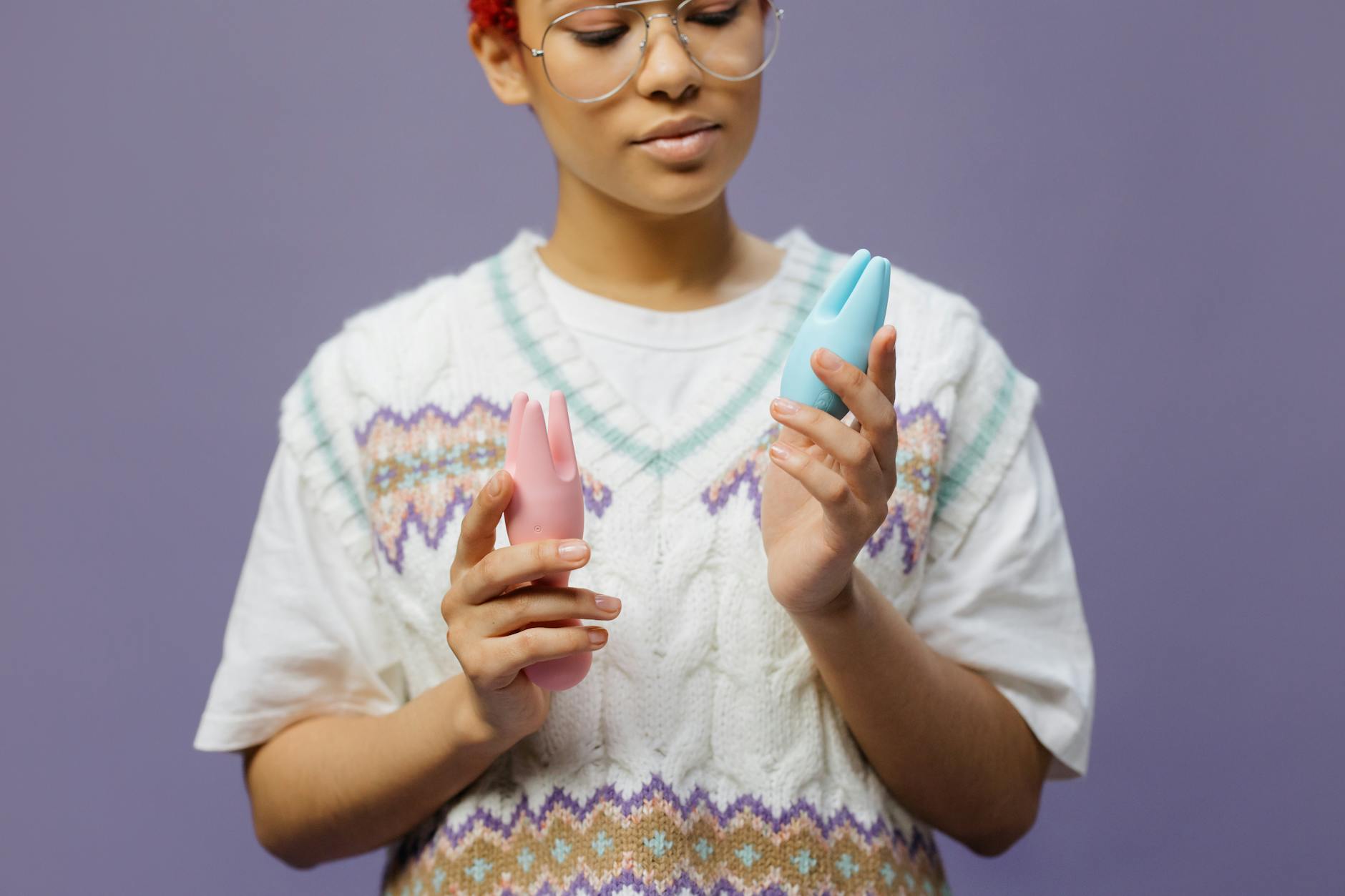
You've been through something. Your body knows.
Physical illness or surgery creates a unique kind of distance from pleasure. It's not just that you feel weak or sore. Your nervous system has been in survival mode. Your mind has been elsewhere. When you start thinking about sex or solo pleasure again, there's often a hesitation that has nothing to do with desire and everything to do with the gap between your body now and your body before.
Lemon clitoral vibrators help close that gap in a way that manual stimulation or traditional vibrators sometimes can't. They offer predictability, gentle escalation, and a kind of permission structure that your nervous system needs to feel safe again.
Here's what I've seen work in my practice, and why the mechanics of a toy like a lemon vibrator matter when you're rebuilding.
Why your body needs gentle reentry
After illness or surgery, your nervous system is literally recalibrating. For weeks or months, your body was a problem to be managed. Now you're asking it to be a source of pleasure again. That's a significant shift, and it doesn't happen on a timeline that feels logical.
Tissue sensitivity often decreases during recovery. Pain medication, inflammation, scar tissue, or simple deconditioning means your clitoris might feel less responsive than before. This can feel alarming, but it's usually temporary. The issue is that when sensation is unpredictable, your brain gets anxious. Anxiety creates tension. Tension makes everything feel duller.
That's where consistency becomes crucial. A lemon clitoral vibrator delivers the same pattern, intensity, and frequency every time you use it. Your body can relax into that predictability. Your nervous system stops waiting for something to go wrong.
The lemon sucker advantage after recovery
Lemon sexual toys, particularly air-suction clitoral vibrators like the Lemon Wand line, work differently than traditional vibrators. Instead of rapid up-and-down movement, they create a gentle pulse that feels like a mouth. That suction sensation is often less overwhelming to recovering tissue than direct vibration.
Think about it: your clitoris is sensitive right now. Even at low settings, a conventional vibrator can feel too intense or even uncomfortable. Suction disperses that intensity across a broader area of tissue. It's gentler, more gradual, and you can feel the buildup happening. There's no shock.
For people returning from surgery (especially gynecological procedures), this matters. There's often residual inflammation, nerve sensitivity, or just plain apprehension about anything touching that area. Suction feels less invasive. It's also easier to control. You can pause, rest, and restart without losing your place.
Pattern, rhythm, and psychological permission
When you're rebuilding arousal, your mind needs something your body can trust. A lemon vibrator with multiple patterns gives you that trust in stages. You start with pattern one. It's subtle, almost meditative. Your body relaxes into it. Over days or weeks, you explore pattern two, then three. You're not forcing yourself into intensity. You're letting your nervous system guide the pace.
This is where the psychology gets interesting. Illness strips autonomy. You follow doctors' orders, manage medications, adapt to limitations. Pleasure is one of the first things you outsource to "later." Using a toy puts agency back in your hands. You choose when, how long, and how intense. That control itself is healing.
Many people I work with tell me that the first time they had an orgasm after recovery, it felt like a small victory. Not because orgasm is the goal (it isn't always), but because their body proved it could still do that. Still respond. Still feel. A lemon clitoral vibrator doesn't demand an orgasm. It just makes the pathway to pleasure simpler and quieter.
Practical steps for starting again
If you're cleared by your doctor to resume sexual activity and you're thinking about using a lemon vibrator, here's what actually works:
Start at the lowest setting. Even if you used vibrators before, your sensitivity has changed. The lowest pattern on a lemon sucker vibrator is often enough to begin. You can always increase; you can't unexperience overstimulation.
Warm up longer than you think you need to. Illness affects arousal speed. Your body might need 20 or 30 minutes of gentle stimulation before anything feels like much. That's normal. Use that time to reconnect with your body without judgment.
Use water-based lubricant without hesitation. If you've had surgery or infection, tissue might feel dry. Lubrication isn't a sign of brokenness. It's a tool. It makes everything feel better.
Stop whenever you need to. Pleasure should feel like permission, not obligation. If you feel pain, discomfort, or just fatigue, stopping is the right choice. Your body is relearning trust.
Track what patterns feel good. After a few sessions, you'll notice which settings and rhythms your body gravitates toward. That information is valuable. It tells you where your nervous system feels safest.
When to involve a partner
If you're in a relationship, this return to pleasure doesn't have to be solo. But it helps to set expectations first. Your partner might be waiting for sex to resume. You might be thinking about touch and connection in a much wider way.
The conversation that works is simple: "I'm exploring what feels good again. I'd like to use a toy, and I'd like to go slowly. If you want to be present, that's welcome. If you want to give me space, that's also fine." That clarity prevents the weirdness that happens when one person thinks you're building toward intercourse and the other person is just trying to feel something.
Using a lemon vibrator with a partner present can also help rebuild intimacy without the pressure of performance. They're not "doing it wrong." The toy isn't replacing them. It's just the tool that helps your body relax into the experience.
The difference between sensation numbness and genuine desire loss
Here's an important distinction I see people miss. Numbness ("nothing feels like much") is often temporary and physical. Desire loss ("I don't want to feel pleasure") can be psychological and might need a different kind of attention.
If sensation feels flat but you intellectually want to explore pleasure again, a lemon clitoral vibrator can help rebuild that bridge. If you feel no desire at all, that might be worth a conversation with your doctor. Depression after illness is real. Sometimes it looks like a sex drive that just vanished.
Both are valid. Both are recoverable. But they need different approaches.
Rebuilding is not a straight line
Some days your body will feel ready. Other days, you'll start exploring and realize you need to rest instead. That's not failure. That's your body still healing. Recovery from serious illness is months, sometimes years. Pleasure returns on its own timeline, not on a checklist.
A lemon vibrator makes that return easier because it doesn't require anything from you except to show up. It meets you where you are, whether that's barely sensate or curious again. It offers consistency when everything else in recovery feels chaotic. And it gives you permission to prioritize something as simple and essential as feeling good.
People also ask
How long after surgery can I use a vibrator?
That depends entirely on the surgery. Gynecological procedures usually get a 4-6 week clearance before any internal stimulation. Check with your surgeon before trying anything. When you do restart, external-only tools like lemon clitoral vibrators are gentler than internal toys. Start at the lowest setting and go slowly.
Will a vibrator feel different after illness?
Almost certainly, yes. Your tissue sensitivity might be different. Your arousal pattern might take longer to build. You might prefer gentler sensation than before. That's not permanent (usually). It's your nervous system recalibrating. The best toy is the one that works with your body as it is now, not how it was before.
Is it normal to not have an orgasm when using a vibrator after recovery?
Completely normal. Orgasm is not the metric of successful pleasure. Feeling something. Reconnecting with your body. Experiencing a moment of ease. Those all count. Sometimes it takes weeks or months before orgasm returns. Sometimes it comes back differently. All of that is okay.
Can I use a lemon vibrator if I'm still taking pain medication?
Yes, but go slower. Some pain medications affect sensation and arousal speed. You might need even longer warm-up time than usual. You might not feel much at all, and that's fine. You're not trying to achieve anything. You're just reconnecting.
Should my partner use the vibrator on me, or should I use it alone?
Try both and see what feels right. Solo exploration lets you focus on your own sensation without performance pressure. Partner involvement can rebuild intimacy. Neither is better. Some people start solo and add partnership later as confidence grows.
How do I know if I'm pushing myself too hard?
Pain is a signal to stop. Persistent discomfort after sessions (not during) might mean you're doing too much. Frustration or irritation is your sign that today isn't the day. Pleasure should feel easy, not like exercise. If it feels like work, rest and try again tomorrow.
You're not behind
Illness and recovery steal things from you. Time. Energy. A sense of your own body. Pleasure feels far away when you've been sick. But it's not gone. It's waiting for you to be ready. Using a lemon clitoral vibrator is one way to meet that readiness gently, without pressure or guesswork. Your body has been through something. It deserves that gentleness. It deserves to feel good again.
If you want to talk through what might work best for your specific situation, reach out at /contact. There's no judgment here, just support for getting back to what feels good.